
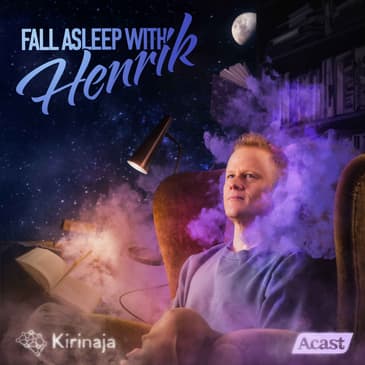
Hello Sleepies, and welcome to another episode of Fall Asleep with Henrik.
In this episode, I took some time to welcome all the new listeners who have discovered the podcast recently.
I explained that this is not a typical relaxation or meditation podcast, but rather me, Henrik, just talking in a way that hopefully helps you fall asleep.
You don't have to listen to me as I speak! I really mean that!
I also addressed some technical aspects of the podcast, such as why it's not available on YouTube due to ad revenue sharing issues between my hosting platform and YouTube.
I expressed my gratitude for all the listeners who have reached out from various countries, sharing how much they appreciate the podcast. It's an incredible feeling to connect with people across the globe.
The main topic of this episode was about the evolution of language and culture, and how older generations often criticize younger generations for "ruining" things. I shared my perspective that it's arrogant to assume that the way we lived in the past was inherently better, and that each generation faces its own unique challenges and opportunities.
I also recounted an embarrassing story from my early acting days, when I made a fool of myself in front of my idol, Henric Holmberg, by awkwardly blowing him kisses and saying nonsensical things. It was a cringeworthy moment that I've never quite gotten over.
Towards the end of the episode, I marveled at the fact that technology allows us to connect so intimately with people all over the world, despite being separated by time and space. It's a privilege that was once reserved for only the most elite members of society, but now we can all experience it with ease.
As always, I concluded by reminding you, Sleepy, that you are beautiful and valued. I hope this episode helped you drift off to a peaceful slumber. Goodnight, and I'll talk to you again next week.
Hosted on Acast. See acast.com/privacy for more information.
[00:00:00] A lot can happen in the next three years.
[00:00:02] Like a chatbot may be your new best friend.
[00:00:04] But what won't change?
[00:00:06] Needing health insurance.
[00:00:07] UnitedHealthcare Tri-Term Medical Plans are available for these changing times.
[00:00:11] Underwritten by Golden Rule Insurance Company, they offer budget-friendly, flexible coverage
[00:00:15] for people who are in between jobs or missed open enrollment.
[00:00:18] The plans last nearly three years in some states, with access to a nationwide network
[00:00:22] of doctors and hospitals.
[00:00:24] So for whatever tomorrow brings, UnitedHealthcare Tri-Term Medical Plans may be for you.
[00:00:28] Learn more at UH1.com
[00:00:58] There's never been a faster or easier way to start your weight loss journey than with
[00:01:04] Plushcare.
[00:01:05] Plushcare accepts most insurance plans and gives you online access to board-certified
[00:01:09] physicians who can prescribe FDA approved weight loss medications like Wigovia and
[00:01:14] ZepBound for those who qualify.
[00:01:16] Take charge of your health and speak with a board-certified physician about a weight
[00:01:20] loss plan that's right for you.
[00:01:22] Get started today at plushcare.com slash weight loss.
[00:01:25] That's plushcare.com slash weight loss.
[00:01:28] Hi and welcome to Fall Asleep with Henrik.
[00:01:36] I'm Henrik and you're sleepy and it is what it is.
[00:01:42] What happens happens.
[00:01:45] And right now there's nothing we can do about it.
[00:01:55] So let's begin.
[00:01:59] Hi sleepy.
[00:02:00] Hi.
[00:02:03] Okay.
[00:02:04] So welcome all you new sleepies out there.
[00:02:09] During the last week or so, there's been this huge influx in number of listeners.
[00:02:17] Generally I try to talk in a way that you will get the feeling that you're the only
[00:02:30] one who is listening.
[00:02:33] My experience is that that works best if I talk like it's just you and me here,
[00:02:43] not like thousands of other people.
[00:02:46] And I'm going to continue to do that but now and again I just have to mention
[00:02:54] that we are a group of people here and I guess it's fine.
[00:03:04] I guess it's a possible way of existing, like behaving like it's just you and me
[00:03:12] but not forgetting, not denying that that's not true.
[00:03:18] Actually there is me and there's all of you.
[00:03:24] So welcome to Fall Asleep with Henrik.
[00:03:27] All of you.
[00:03:28] New people and old people.
[00:03:32] Established sleepers and newcomers.
[00:03:37] My name is Henrik.
[00:03:39] I am a 48 year old actor in Sweden and I've been doing this for a living since 2018.
[00:03:51] If you already know what this podcast is, now is the time to, if you just can't stand
[00:03:58] me telling new listeners what this is all about, you could maybe skip ahead like one
[00:04:05] minute or so.
[00:04:08] But you don't have to.
[00:04:10] Maybe you need a refreshener.
[00:04:12] Maybe you need me to reconfirm what this is all about.
[00:04:22] So this is not a regular sleeping podcast.
[00:04:27] This is not a relaxation method.
[00:04:32] Not any established method anyway.
[00:04:38] It's not meditation, it's not hypnosis, it's not a self-help guidance system.
[00:04:49] I am some dude in Sweden and I am good at one thing, talking.
[00:04:59] Apparently this works.
[00:05:01] At least in Sweden where I live, where this podcast has been one of the big ones for
[00:05:09] many years now.
[00:05:12] I'm trying to do this in English and of course that's a different story.
[00:05:16] I don't know if this is even possible.
[00:05:21] But I'm going to try.
[00:05:23] Because the world is a wonderful place and I like to live in it and I want to reach
[00:05:27] out.
[00:05:30] So what you need to know really about this podcast is you don't have to listen.
[00:05:40] That's not something I just say, that's true.
[00:05:45] If you want you can listen but you don't have to.
[00:05:49] You don't have to even hear my words, you could just put me on like a distant
[00:05:55] mumble in the background if you want.
[00:05:57] I don't mind.
[00:06:00] I don't have any illusions of me being saying something profound or wise or even
[00:06:06] funny.
[00:06:09] I'm just going to talk.
[00:06:12] I'm not going to try to bore you, I'm not going to try to make you fall asleep
[00:06:19] with some hidden magical hypnosis method.
[00:06:26] I'm just going to speak the way I usually do.
[00:06:30] The only difference is that I now speak with a different tool set.
[00:06:38] The language is English and I'm not used to it.
[00:06:43] So that's all really you need to know.
[00:06:46] You have pushed, you have pressed play.
[00:06:49] Now your job for the day is over.
[00:06:53] That's what I tell my Swedish listeners all the time.
[00:06:56] You don't have to make a stand.
[00:07:00] You don't have to build an opinion about what you hear.
[00:07:07] You don't have to engage with me.
[00:07:14] This is in some sort of a strange way non-content.
[00:07:23] I don't produce content, I produce non-content.
[00:07:30] This is a new genre which I just came up with and I don't know if it works or not.
[00:07:37] It works in Swedish.
[00:07:43] With that said, if you like this tell me, write a review on the podcast platform
[00:07:49] that you're listening to this podcast and leave a like or whatever you do.
[00:07:58] You can find this podcast almost everywhere except for on YouTube.
[00:08:02] I thought I might take some time just to establish the facts around that.
[00:08:10] I am dependent on ads in the beginning of these episodes in the regular feed.
[00:08:19] You can hear ads.
[00:08:22] I have removed all ads from the middle and the end of the episode because I wouldn't
[00:08:29] want you to wake up to an ad.
[00:08:35] I wouldn't want you to sleep to an ad either.
[00:08:38] So, either.
[00:08:42] So the ads are first thing in these episodes and the ads are the only way I can make
[00:08:49] a living out of podcasting.
[00:08:52] You can subscribe to removing the ads and you can just click the description in the
[00:09:00] podcast's description.
[00:09:09] But YouTube has a different set of rules.
[00:09:12] So YouTube is a very good place for me generally.
[00:09:15] I like to work through there and I do a lot of content both on my Swedish and
[00:09:20] my English YouTube channel.
[00:09:24] If you want you can follow my English YouTube channel.
[00:09:28] It's called Fall Asleep With Henrik.
[00:09:31] You can also follow me on Instagram if you want.
[00:09:34] You don't have to.
[00:09:35] I'm not that important.
[00:09:40] I won't change your life.
[00:09:43] Really I won't.
[00:09:44] You will though and that's another story.
[00:09:48] But you can find me on Instagram as well.
[00:09:51] It's called Fall Asleep With Henrik.
[00:09:55] So whenever I post stuff on YouTube there's ads there and they are from YouTube.
[00:10:11] And whenever I post a podcast there's ads and those ads are from ACOST which is
[00:10:17] my platform.
[00:10:20] So ACOST and YouTube doesn't cooperate.
[00:10:24] They have their own claim to totally own the ads and the revenue from the ads.
[00:10:32] So that's why my podcasts aren't on YouTube because I'm on ACOST and ACOST can't share
[00:10:42] market revenue or what do you say?
[00:10:44] Can't share ad revenue with YouTube.
[00:10:48] Sorry for boring you with this.
[00:10:50] But I've got a lot of questions about this.
[00:10:55] So it's a problem for me because YouTube is a great platform and I wish they could
[00:11:00] cooperate but they don't at the moment.
[00:11:03] So that's where we're at.
[00:11:06] So you can find this podcast everywhere else but on YouTube.
[00:11:12] But I will do other stuff on my YouTube channel.
[00:11:19] Thank you from the bottom of my heart to all of you who reached out and wrote to
[00:11:24] me through different channels and told me what you thought about this little experiment
[00:11:34] Fall Asleep With Henrik.
[00:11:37] And I've gotten letters from Greece, Spain, France, the US, England, India and Japan.
[00:11:53] So thank you so much.
[00:11:57] Maybe this sounds, I don't know, but it sounds maybe a bit naive.
[00:12:08] But I am a grown man and I've never, I've been in the public eye since I was in my
[00:12:16] 20s, my early 20s.
[00:12:20] I did my first TV gig when I was 21 and then I became a minor celebrity in Sweden
[00:12:28] when I was very young.
[00:12:30] So I've been in the public eye in Sweden almost my entire adult life.
[00:12:37] And the tickling sensation of suddenly being in touch with people from other countries
[00:12:52] telling me that what I do provides them with something.
[00:12:58] It's I can't really explain, I can't put it into words what it does to my,
[00:13:06] I mean, I feel like I'm 12 years old again.
[00:13:11] It's a fantastic feeling.
[00:13:13] One I wish everyone could feel.
[00:13:17] Maybe you don't actually need to create a YouTube channel and a podcast to and reach
[00:13:24] audiences outside of your own country to experience that.
[00:13:28] Maybe you could just start an evening course or something.
[00:13:33] I don't know.
[00:13:35] But it is, I mean, this is a very, very small podcast still and maybe that's all
[00:13:44] that it will ever be.
[00:13:47] But at the moment I feel like I'm on top of this huge wave sweeping across the world
[00:13:55] and I feel so excited because a few of you reached out and wrote to me.
[00:14:06] So please keep doing that.
[00:14:08] I am so happy.
[00:14:12] And yeah, that's it really.
[00:14:20] OK, so that was a bit more than one minute if you tried to skip ahead.
[00:14:26] But then again, you don't need to listen really.
[00:14:31] I will.
[00:14:32] I can't promise anything.
[00:14:37] What you hear is what you get.
[00:14:40] So I'm literally, I promised myself never to use the word literally because it's such
[00:14:47] a worn out word, especially in like entertainment context.
[00:15:03] My daughter Harriet, she's watching YouTube clips from different creators.
[00:15:10] There's a lot of artists and photographers and lifestyle channels and all of them are
[00:15:24] like around their 20s.
[00:15:27] And every one of them, at least if they're from Britain or the US or Australia even,
[00:15:36] they use the word literally, literally every sentence.
[00:15:42] And in Sweden we have this word, liksom, which is sort of our Swedish equivalent of
[00:15:52] kinda.
[00:15:56] So liksom means kinda.
[00:16:00] We use the word liksom almost as often as some of these young adult content creators
[00:16:08] use the word literally.
[00:16:13] I don't even know what literally literally means now because it's been used in so many
[00:16:20] different contexts.
[00:16:22] You can say, I am literally standing right in front of you.
[00:16:27] OK, so that has a meaning.
[00:16:31] That means something, right?
[00:16:33] That means that I'm actually standing right here and you don't seem to realize that.
[00:16:39] But you can also say like, this is literally what it says.
[00:16:50] OK, so maybe that's the same meaning.
[00:16:56] But you can, I mean, I guess literally stems from the word literal, which is
[00:17:04] another word for written, I guess.
[00:17:07] And written in this context is maybe a term for a fact, I guess.
[00:17:17] So using the word I am literally standing right in front of you means that the fact
[00:17:24] is that I'm standing here.
[00:17:29] OK, so that's one thing to keep in mind when using the word literal is it's common.
[00:17:40] I feel like an idiot now because I can't come up with any examples.
[00:17:49] And I don't want to be this grown ass man that complained about young people's language
[00:17:58] usage.
[00:18:01] I don't care.
[00:18:02] I don't care.
[00:18:03] OK, so I'm going to abandon this.
[00:18:09] I don't care or rather I care about the opposite.
[00:18:14] I care about the world being an ever changing place.
[00:18:24] I care about the evolution of language and culture as well as the evolution in other
[00:18:34] areas.
[00:18:38] I had this, I was at this lecture when I was in my 20s when I went to actor
[00:18:46] school.
[00:18:47] There was this elderly actor who had this lecture about the evolution of language.
[00:18:56] And there were a lot of elderly people there and of course me and my classmates
[00:19:02] at the Actors Academy.
[00:19:05] And the older people were all very, they were not pleased with the development of
[00:19:16] the Swedish language.
[00:19:19] Young people are ruining Swedish as we know it.
[00:19:26] And this actor, Henrik, he was actually called Henrik as well as me.
[00:19:30] He was actually he was OK.
[00:19:34] I've been telling this story many times in the Swedish version of this
[00:19:38] podcast but I'm going to come to this later.
[00:19:42] He was my idol for many years and every time we saw each other I just made this
[00:19:53] social awkwardness.
[00:19:57] I was just so awkward and every time we met was a disaster in a social way.
[00:20:02] But I'm going to come to that if I can remember it.
[00:20:06] Henrik, he said that isn't this what old people have been saying like forever?
[00:20:15] And I talked to my mother on the phone the other day and she told me that.
[00:20:22] She asked me how I was doing and I said that we had this community clean up
[00:20:28] project among the houses where I live.
[00:20:35] All the neighbors get together and we clean up our yards and the forest around our
[00:20:39] houses and we paint the swings on the playground and we talk and we have coffee
[00:20:50] and we eat hot dogs.
[00:20:51] And it's a nice gathering but I had a conversation with two of them and they
[00:20:59] were talking about TikTok and that young people today are just watching other
[00:21:08] people do stuff.
[00:21:11] They're not doing stuff themselves.
[00:21:13] They're just watching other people do it.
[00:21:18] And I immediately get very anti this sort of discussion because it's I believe
[00:21:30] how could we possibly know what this behavior, this contemporary culture will
[00:21:41] lead to in the future?
[00:21:42] How can we possibly know anything about what something we've only known about for
[00:21:49] seven years of human evolution?
[00:21:51] How could we possibly claim to know what this will lead to in the future?
[00:21:57] That's called extrapolation.
[00:22:00] You're using the tools of yesterday to measure tomorrow.
[00:22:04] And I mean this works in some situations but not in every situation.
[00:22:13] I mean we can't possibly know what kind of difficulties our children will face in
[00:22:19] the future because the future is not here yet.
[00:22:26] And we don't know what the internet and social media will do to humanity in the
[00:22:33] long term.
[00:22:36] And also there's another aspect of it.
[00:22:39] It's sort of an arrogant point of view to claim that me and my children and
[00:22:50] my father and my grandfather, we are living the right way.
[00:22:56] The kids today, every other kid, maybe not my own then but the kids of today,
[00:23:03] they are ruining language.
[00:23:06] They're ruining their own future.
[00:23:07] They're ruining it.
[00:23:08] I mean it's such an arrogant way of looking at development and humanity in a
[00:23:15] way.
[00:23:16] Imagine the generations growing up around the first or the second World War
[00:23:25] who were kids then.
[00:23:27] My grandfather and grandmother, my father's mother and father were kids.
[00:23:36] They were actually born in 1907 and 1905.
[00:23:43] So they've seen two World Wars.
[00:23:46] Of course, they're deceased now.
[00:23:49] And they were kids during these eras.
[00:23:54] So I mean and of course this is, I mean maybe this is not a valid point of
[00:24:00] view in a way because I am from Sweden and they were from Sweden and Sweden
[00:24:05] was there was never a war here.
[00:24:08] It's not fair to compare them to generations being kids in.
[00:24:16] So imagine that you were living in Poland during the Second World War
[00:24:24] and that you belong to a minority.
[00:24:32] I mean this would be a very, very, very, very, very, very, very, very
[00:24:40] I mean this would how you could say from a lot of perspectives that this
[00:24:50] generation of kids were ruined, you know, but they weren't.
[00:24:57] Generations face obstacles, traumas and receive gifts by time, society and space
[00:25:14] and stuff are taken away from kids all the time.
[00:25:19] But the kids today have tools that like that generations before us never had.
[00:25:28] The kids today are growing into a world exponentially more equipped, I believe,
[00:25:38] to deal with it.
[00:25:39] And they will hurt as much as every generation from one decade to another will or would
[00:25:48] or did, but they won't.
[00:25:55] They're not hopeless.
[00:25:57] Don't you agree?
[00:26:00] So I always get this, I always get very frustrated when I hear discussions like that
[00:26:09] I never got involved in the discussion because I didn't feel like I wanted to make a big
[00:26:23] debate out of it because I strongly disagree.
[00:26:28] I believe it's a fearful way of looking at humanity.
[00:26:33] We are really very adaptive and strong and we can do whatever we put our minds into.
[00:26:43] So I don't think that our kids today are ruined or will have a worse future just because
[00:26:50] they're on TikTok watching other people do stuff.
[00:26:55] I mean, when you say it out loud, it's just absurd.
[00:27:03] So I guess that's where I stand.
[00:27:06] And I told my mother about this and she said expectedly that I was wrong
[00:27:15] and that the ideal childhood, at least in Sweden, was around 1955.
[00:27:23] That was the best period to be alive in for a kid.
[00:27:30] And sometimes I have to bite my tongue because I get very frustrated and I also get like
[00:27:40] I start to laugh.
[00:27:42] I laugh at her because I think it's very hard for me to take that seriously because
[00:27:51] kids died of the measles in the 1950s.
[00:27:55] I mean, how would that be any better?
[00:27:59] If you were born outside of marriage in the 1950s, you were maybe an outcast of your own
[00:28:06] family.
[00:28:08] That still happened.
[00:28:14] If you were a woman and you were trying to pursue a career, you could of course
[00:28:20] in the 1950s, but it was frowned upon in many, many areas of society.
[00:28:27] I mean, I don't see how this could be better than what we have today.
[00:28:33] Today there's all sorts of dangers and traps and dark streaks in society and culture,
[00:28:44] but it's not better or worse than any other totality.
[00:28:49] I mean, totality being talking about this huge culture in a worldwide system like it
[00:29:00] was one thing because of course there were bad things in the 50s and there was also
[00:29:04] good things.
[00:29:06] Right now there's also bad things and good things.
[00:29:14] So I never got involved in that discussion and I'm glad I didn't, but now I'm just
[00:29:21] forcing you to listen to it, Sleepy.
[00:29:25] I'm sorry.
[00:29:30] Maybe you think it was better before everything.
[00:29:38] I get a feeling that a lot of my listeners have an issue with today.
[00:29:49] Maybe that's something that just, it's a state of our time so to speak.
[00:30:01] Maybe we are in a phase as a humanity, right?
[00:30:06] As a group.
[00:30:09] If we can talk about this billion headstrong mass of people, different hearts,
[00:30:18] different brains as one unison group, but it's maybe we're in a period of our
[00:30:31] common humanity.
[00:30:34] Common humanity being that questions a lot of stuff.
[00:30:41] Sometimes I feel, at least in the Western world, that we're in some sort of grown up phase.
[00:30:52] We have left the messy teenagers, the messy teenage period behind us
[00:31:00] and now we're in this waking up to smell the coffee kind of period.
[00:31:11] Like we were in our early 20s, maybe our early 30s, maybe that's even better maybe.
[00:31:19] We are discovering that stuff we've taken for granted for a long time isn't really valid.
[00:31:26] We are desperate for answers in all directions.
[00:31:31] We have been given tools that has never been owned before.
[00:31:41] I can make a podcast and someone in India can listen to me.
[00:31:46] That's of course a huge, very potent tool.
[00:31:55] Very potent tool.
[00:31:59] As we get access to those tools, we grow I think in the long run at least.
[00:32:06] I think we grow maybe we sometimes regress as well in the short term.
[00:32:15] But I believe sleepy and I truly do that our smaller bigger world will benefit us in the end.
[00:32:26] I now I can't really really oh no there's a helicopter flying above my studio.
[00:32:36] This happens from time to time and maybe you don't hear it because the plugins will remove all
[00:32:40] the the rumble. I really I have two issues with the sound environment here in my studio.
[00:32:53] One of them being helicopters and airplanes sometimes flying low.
[00:33:00] Over my studio over our front yard.
[00:33:06] Then it's now in the summertime we have a lot of mosquitoes here.
[00:33:12] So they fly close to the microphone sometimes and I have
[00:33:20] right now knock on wood I don't have any mosquitoes inside of my studio but
[00:33:26] they will surely be here eventually.
[00:33:31] There's been an invite I sent out an invite so maybe they'll come.
[00:33:39] As you say in studio building terms if you build it they will come.
[00:33:45] They say so they will just arrive you know and then they will be here and they will
[00:33:51] fly around my microphone because they want to talk as well and they have a very nasal
[00:34:00] boring message to deliver. It's just please give me
[00:34:11] give me of your give me your blood like preferably all of it.
[00:34:17] Of course I won't be able to absorb all of it but I will I have friends I have like
[00:34:25] eight billion friends outside and they will come if I tell them to you know because you
[00:34:30] built it so we will come. So once in a while one of the mosquitoes will fly close to
[00:34:40] the microphone and most commonly all of my plugins will remove the noise from the mosquito
[00:34:50] but sometimes you can hear it and that's some sort of a little hiss maybe.
[00:35:01] So that's an issue and so then there's this other issue and this we have this
[00:35:07] I live at the end of a road so cars that have gone lost they come here they stop they go out
[00:35:19] and they discuss maybe where they are or maybe they go out into the forest that starts right
[00:35:29] outside my yard and they perform their
[00:35:37] naturally duty or whatever I don't know they pee okay they pee and sometimes I can see them
[00:35:46] okay now it sounds like I'm living in hell this doesn't really happen very often but
[00:35:52] when it happens it's always very I don't really know what to do because
[00:35:59] think people think that my studio is some sort of a storage barrack
[00:36:06] because the window isn't seen from the street so they run out in the forest believing that
[00:36:15] my studio is actually some sort of a
[00:36:19] unhabitable place where you put your summer furniture in the winter and then they
[00:36:31] yeah they expose the parts that need to be exposed in order to perform your naturally duty
[00:36:39] and then they stare right into my face doing that and that's of course very awkward for me
[00:36:47] and for them and they sometimes I get a feeling that they think that I'm doing this on purpose
[00:36:58] in a way that I just placed my container here just to be able to see people performing their
[00:37:08] cosmological needs not meditating in the woods but I assure everyone who's listening that I was
[00:37:16] here first the studio was here first the need to pee I mean of course been originating from
[00:37:22] the very dawn of our species or maybe earlier than that the need to pee right outside of
[00:37:31] my studio is not something that you have the right to per definition but because I work here
[00:37:39] you know so but I mean now it sounds like this happens all the time it doesn't really
[00:37:48] it's happened like two times the last hour no no I was kidding I'm kidding otherwise there's
[00:38:02] this is a very silent place I live in Stockholm so there's noise around us
[00:38:13] but our house is outside of the city and the main roads are not very close to us
[00:38:23] so of course I can hear traffic but it's like this distant stream
[00:38:33] it's not in my immediate attention span which is good oh yeah I was going to tell you about
[00:38:46] Henrik Holmberg the Swedish actor that was my idol for many years if you're a Swedish
[00:38:53] somna then you know what I'm talking about but if you've never heard this it's this is
[00:39:02] one of my more common stories from my earlier life you know when you meet people that
[00:39:12] you admire and you meet them and then something goes wrong
[00:39:18] you try to make a good impression you try to maybe tell them that you adore them in a way
[00:39:29] admire them and but something socially goes wrong there is a miscommunication the person
[00:39:37] misunderstands something and then there's this gap in your in the in the line in the
[00:39:47] communication strings between you and as as soon as that happens there's almost
[00:39:55] no possibility that you can re-bridge that it's always very very hard after you made the first
[00:40:03] social mistake because the the stakes are so high because you admire the person
[00:40:11] so maybe that person doesn't even realize that there's been an issue they just think that
[00:40:18] you're a very weird person you know and Henrik Holmberg he's an actor here maybe he is in his
[00:40:27] late 60s now I don't know he was an actor in Gothenburg where I studied to be an actor
[00:40:35] myself and one of my first weeks in actor school I went to see him in Romeo and Juliet where he
[00:40:45] played the the what do you call it the Wetners the oh I don't know the English word for it
[00:40:55] Juliet. Juliet retro up with this woman. She took care of her as a baby and now she's her
[00:41:07] confidant and Henrik played her and he did it brilliantly funny and gripping and dark and
[00:41:20] and also very, very, very funny.
[00:41:25] And I was so shy in the beginning.
[00:41:30] I felt like I was like nine years old and all the other, all my classmates were these
[00:41:38] experienced wolf-like creatures with beard and long hair.
[00:41:44] And this was in the nineties and every man who was something looked like a monster really.
[00:41:53] In Sweden we had this bad boy theme going through all male actors.
[00:42:00] You had to look like you could beat someone up for farting, you know,
[00:42:07] or for coughing too loud or something.
[00:42:09] And of course you had to have a drug problem.
[00:42:13] So all of them, no, I'm not going to say that all of them did,
[00:42:18] but it was a lot of drinking and using other stuff.
[00:42:22] And I was new to all of that and I felt I was only 20 years old and I felt like I was a child
[00:42:33] and I felt left out and I didn't drink.
[00:42:36] At that time I never used any drugs.
[00:42:40] So I immediately got left out of that club, you know, and I felt like a dork, you know,
[00:42:53] like a geek.
[00:42:56] And I went to this performance of Romeo and Juliet and afterwards we got to talk with the
[00:43:03] actors, my classmates and I.
[00:43:05] And I went up to Henrik who played the wet nurse and I wanted to say to him
[00:43:14] that I thought that he was brilliant, but I was in this environment of being cool.
[00:43:24] You know, you couldn't just run up to someone and say,
[00:43:30] hey, I thought that you were really good and you really inspire me
[00:43:34] and I want to be just like you when I grow up and stuff like that.
[00:43:38] You can't say that, you had to come up to him and say something very clever and wise
[00:43:43] and maybe diss him a little bit, you know, because you needed to be cool,
[00:43:49] because we were the new hope of acting in Sweden.
[00:43:54] That's how we were supposed to look at ourselves.
[00:43:57] And my classmate Ola, he said that this is a fucking boring play about two teenagers
[00:44:05] climbing on vines.
[00:44:09] I mean, and he said that about, I mean, everyone laughed and we all agreed presumably
[00:44:17] that William Shakespeare was like this very extraordinary bad playwright, you know?
[00:44:27] Because we were going to change the world or whatever.
[00:44:32] And I'm sorry for saying it, but I mean, why did we have to be idiots?
[00:44:38] Why?
[00:44:39] Why is it that when you're in a certain development phase,
[00:44:43] why is it like a rule that you have to behave like an idiot?
[00:44:48] So all of these cool actor students went over to the actors and we had this conversation
[00:44:56] and I went up to Henrik and I said to him,
[00:45:01] well, I wanted to say stuff like, I thought that you were really good.
[00:45:07] I laughed genuinely for so long and you gripped me because you were playing this old lady
[00:45:17] and it wasn't just a man in woman's attire.
[00:45:22] It wasn't like that because I always think that it's kind of cheap to do that
[00:45:28] because it's just easy to laugh at a man who dresses in like a gown or an apron.
[00:45:38] But so that wasn't it.
[00:45:42] You really captured some weird person with very own motivations.
[00:45:52] And of course, very funny and with really a comic relief in this very tragic play.
[00:45:59] So it was wonderful to see because I'd never seen by then,
[00:46:04] I'd never seen humor in any Shakespeare tragedy being performed.
[00:46:12] The tragedies were really just tragic and I don't think that Shakespeare would approve.
[00:46:18] I think that his tragedies were really filled with comic relief
[00:46:24] because how else are you going to make people stand up and watch your play like twice a week
[00:46:31] in like the 1600s, 1700s? I don't know, 1600s.
[00:46:43] But I couldn't speak because I was so shy.
[00:46:51] And all the courage I had was exactly enough for me to get his attention.
[00:47:00] Like, hey, and then all my courage went away.
[00:47:06] But now I already had his intentions and he was looking at me like,
[00:47:10] yes, what were you going to say?
[00:47:13] And I couldn't come up with anything to say.
[00:47:16] And the class was watching me and the other actors in the play, Romeo and Juliet, were watching me
[00:47:26] like these two young, very good looking,
[00:47:29] newly examined actors from the same school I went to.
[00:47:34] They all looked at me and then I pushed my lips together in a kissing mime.
[00:47:44] And I just did this kissing noise in the air against him.
[00:47:51] And there was this complete silence.
[00:47:57] And Henrik Holmberg said, well, yes.
[00:48:04] And then people started talking about other stuff and maybe Ola said that this is a very bad play
[00:48:11] and everyone agreed, you know, and I wanted to really jump off a roof or something.
[00:48:23] And then it was many years wherever I met Henrik Holmberg,
[00:48:30] there was this very awkward encounters because I had this first encounter in such a vivid
[00:48:38] recollection.
[00:48:42] And then the last time I remember seeing him was at this lecture that he held about
[00:48:48] the development of the Swedish language and the under meaning that it's okay for everything to change.
[00:48:58] It's okay to change, it's okay to watch stuff happening,
[00:49:03] to watch stuff change in front of your eyes because what can you do?
[00:49:08] The world is constantly changing.
[00:49:11] Why would you want to cling to something that can't be clingable?
[00:49:16] Or maybe you can cling to something but then do that and just enjoy it while it's there
[00:49:23] and accept it when it goes away.
[00:49:26] And most of all, let people do as they please.
[00:49:32] Please don't make other people cling to your value.
[00:49:36] You can go your own way.
[00:49:40] If you hate TikTok and smartphones, you can choose to live a life where TikTok and smartphones
[00:49:48] aren't an ingredient.
[00:49:51] That's a perfectly legitimate choice.
[00:49:56] It has of course consequences like every choice and then you can choose whether or not this
[00:50:08] choice is acceptable to you regarding the consequences.
[00:50:13] They could be big, they could be small.
[00:50:18] Anyway, me and my schoolmate Danilo and Henrik Holmberg, we joined together
[00:50:31] as we walked from the school downtown.
[00:50:35] We were going in our different directions but we accompanied each other on the way down.
[00:50:42] And we were talking or Danilo, which is a very socialist, no he's not socialist.
[00:50:52] He's very, wouldn't it be funny if I just now happened to mention that my friend
[00:50:57] Danilo was a socialist and then not commenting on it anymore?
[00:51:01] No, I'm sorry.
[00:51:02] He is a very social person.
[00:51:05] He's very socially competent and everyone likes him or at least they did.
[00:51:12] And he was talking and Henrik was talking and I went quiet because I knew that as soon
[00:51:19] as I opened my mouth, I was going to say something stupid.
[00:51:26] So we went down and we walked down the street.
[00:51:31] This main street in Gothenburg called the Avenue, Avanin in Swedish.
[00:51:38] And we passed McDonald's and I thought maybe I should go and comfort myself with some
[00:51:51] fast food.
[00:51:52] I've always had that escape road.
[00:51:57] That's sort of an escapistic move for me to eat fast food.
[00:52:08] I tend to do that and especially since I quit drinking, I tend to flee into fast food.
[00:52:18] So when I have a bad day, I want pizza, I want milkshakes, I want burgers, I want
[00:52:24] McDonald's.
[00:52:25] And I was in a bad place because I thought that I was really a dork, a geek, someone
[00:52:31] who's not worthy of taking serious.
[00:52:34] So I told Danilo and Henrik that I'm going to go in here and have a supper.
[00:52:41] And they looked at me like, I mean, of course this is my interpretation.
[00:52:45] I don't know if it's true, but they looked at me like, because I went there
[00:52:51] all the time.
[00:52:53] Henrik didn't know that, but Danilo knew that.
[00:52:57] I always ordered a quarter pounder with cheese and a Coke without ice.
[00:53:07] So they knew it when I came into that restaurant.
[00:53:10] They just said, QP and cheese, Coke without ice, which is like ice in Sweden.
[00:53:22] So I knew when I saw Danilo's face that, why do you keep going to those places?
[00:53:28] Why don't you join us and we can go and have a beer somewhere or just talk.
[00:53:34] But I really despised myself, I guess.
[00:53:39] And I wanted to leave before I made a fool out of myself before this man who was my idol.
[00:53:46] And I said, I'm going to go in here and have supper.
[00:53:51] And then I went for a while and then I turned back and I was going to say like
[00:53:57] something cool to bid them goodbye.
[00:54:02] And I watched, I looked him, Henrik right in the eyes and I made this again,
[00:54:11] this kissing thing.
[00:54:12] I don't know why I keep doing that, but this time I kissed my hand and I waved it at him
[00:54:20] like this, I don't know what you call it, like you throw away the kiss, you know?
[00:54:26] So I threw him a kiss and then I was going to say something cool like
[00:54:35] good day folks.
[00:54:37] I don't know what I was going to say, but the words that came out was
[00:54:43] hello, ajo.
[00:54:46] And ajo was probably some sort of twisted variant of the Swedish word, ajö, which is a way of
[00:54:59] saying goodbye in a more mannered way.
[00:55:06] So I turned to him, threw him a kiss and I said, hello, ajo.
[00:55:10] And it went quiet and he looked at me and he said, very confused, yes, yes, hello, ajo.
[00:55:19] And then I turned around and rushed into McDonald's and I stuffed my face with
[00:55:26] whatever empty carbs that I could find, empty calories that I could find.
[00:55:33] And then I took the trolley home.
[00:55:36] So that sleepy was a very, I've told this story many, many times before, but never
[00:55:49] in English.
[00:55:50] This was a very exciting thing to do.
[00:55:55] You're probably asleep now anyway.
[00:55:59] So I guess my secret will be safe yet again.
[00:56:05] I'm thinking about you right now.
[00:56:07] I'm thinking about where you are in the world and I'm not going to stand between
[00:56:15] me and my own childish fascination for the fact that we are in different parts
[00:56:20] of the world together right now.
[00:56:24] I mean, of course, this is a very, very, very, very, very, very, very, very, very
[00:56:31] I mean, of course this is my now.
[00:56:36] It hasn't happened for you yet, but as you listen to my voice, you and I are in
[00:56:44] the same space, in the same universe, but still on different continents maybe,
[00:56:51] different parts of the world.
[00:56:55] And I mean, it's a very deep that we can share something quite intimately
[00:57:04] really.
[00:57:06] And at the same time be separated by both time and space.
[00:57:16] It's an alluring feeling.
[00:57:21] I wonder where you are sleepy right now.
[00:57:27] I mean, you are in a place that's it could be, it could very well be an
[00:57:33] exotic place as far as I'm concerned.
[00:57:37] You could be in a place like I've never even, I've probably never been
[00:57:51] where you are except if you are on a place where I've been, but you could be
[00:58:01] in a part of the world where you hear noises that I would think of as very
[00:58:07] exotic.
[00:58:10] That's amazing.
[00:58:11] It's an amazing feeling that I can talk to you.
[00:58:16] It's almost like we're on different planets, but we're not and that's the
[00:58:20] gift of today, I guess.
[00:58:23] That I, Henrik Stål, which has lived almost his entire adult life in some
[00:58:32] sort of variant of a public eye here in Sweden, can sit here and feel
[00:58:38] awe.
[00:58:39] I feel in awe of you and what you stand for and where you are and what this
[00:58:52] means.
[00:58:53] And I can be so grateful to technology and to today and the future
[00:59:01] generations, which makes this possible.
[00:59:04] Time makes this possible.
[00:59:09] Imagine having this, imagine having this power.
[00:59:15] Imagine having this power talking to someone on the other side of the
[00:59:21] world.
[00:59:22] If that's where you are, you could be next door.
[00:59:24] I don't know.
[00:59:28] Imagine being able to do that like 50 years ago.
[00:59:35] That was something you could only do if you were a major, major star
[00:59:42] or a top tier politician or maybe a higher ranked official in the
[00:59:48] military in some rich country.
[00:59:53] And before that, not many people and before that, kings and emissaries
[01:00:07] and it happened at a very high personal cost, traveling for years.
[01:00:14] And before that, no one, absolutely no one could do what I do now with
[01:00:23] such ease.
[01:00:27] And I mean, it gives so much space to humanity.
[01:00:32] We are afraid of technology, but and of course, maybe there are valid
[01:00:37] points to this fear, but imagine all the time and space we have to be
[01:00:44] humans when technology makes it so easy for us to reach each other.
[01:00:51] I can reach you and you can reach me with such ease.
[01:00:55] We don't have to be experts in any field.
[01:00:59] We could just be humans and sleepy.
[01:01:04] I think that that's so beautiful.
[01:01:09] You are beautiful.
[01:01:11] And I guess I am as well, even though I have a more complicated
[01:01:15] way of looking at myself than looking at the image that I have
[01:01:19] of you.
[01:01:23] Good night, sleepy.
[01:01:25] This episode is now over.
[01:01:28] We'll talk again next week.