
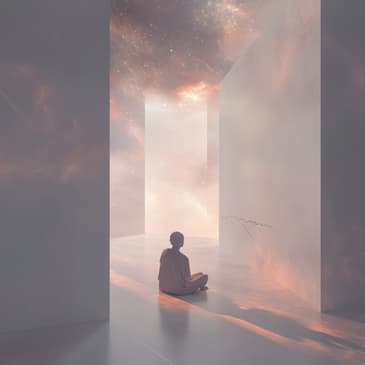
In this deeply personal episode, Henrik navigates through a day of profound emotional exploration, weaving together themes of existential loneliness, parental relationships, and the nature of human connection. Starting from his living room, breaking his usual recording routine, Henrik shares his experience of a "sad day," not in a tragic sense, but in a way that allows him to examine the deeper currents of human existence.
The conversation flows naturally through various topics: from the physics of touch (where we learn that nothing truly "touches" at an atomic level) to memories of his acting school days and a fateful concert that left him with tinnitus. Henrik reflects on parenthood, questioning the inherent responsibility of bringing someone into existence without their consent, while acknowledging the complexity of his own relationship with his mother.
With his characteristic blend of humor and philosophical depth, Henrik explores the nature of content creation, asserting his unique position that what he says "is not important" – a refreshingly honest take in a world oversaturated with self-proclaimed significance. The episode becomes a meditation on authenticity, loneliness, and the beauty of simply existing together in this moment of time.
Through his stream of consciousness, Henrik touches on topics ranging from the peculiar sound of clothes hangers through concrete walls to the vast emptiness between atoms, creating an intimate atmosphere where listeners are invited to simply be present with their own thoughts and feelings, whatever they may be.
For more information on Henrik Ståhl, click here: https://linktr.ee/Henrikstahl
Hosted on Acast. See acast.com/privacy for more information.
[00:00:00] Hi Sleepy, just a very quick note before we start today's episode. Do you want to listen to this podcast without the ads? Then you absolutely can. Just subscribe to Fall Asleep with Henrik plus and to do so you can just click the link in the podcast description and it'll be fixed. See you there.
[00:00:22] Hi and welcome to Fall Asleep with Henrik. I'm Henrik and you are sleepy and it is what it is. What happens happens and right now there is nothing we can do. So let's begin.
[00:00:46] Hi Sleepy. Hi. So I was a bit mobile in the beginning here. I moved from my bedroom and into the living room while recording. I not, I not, I don't, I don't normally do that. Often I'm very stable while recording. I'm sitting or lying down.
[00:01:14] But today I thought I'd try something else. And I don't know, maybe at some point during this recording I will get up and move around. I don't know why.
[00:01:30] So welcome to this podcast. I'm Henrik Stål. I'm this Swedish boy, man, dude. And I'm here to talk you into sleep if you want to. You can also listen to me to get distracted or to get some comfort or whatever.
[00:02:00] I talk about everything and anything. I don't write any scripts and I don't edit anything out either. It is what it is, what happens happens. And that's kind of the motto for the whole podcast.
[00:02:18] Today I have a sad day. I'm not sure why. I guess it has to do with, well, being separated and being in, you know, having me time for like, for real.
[00:02:48] And that gives me a lot of time to think. So I'm not sad in any really tragic way. I guess sometimes you just need time to be sad.
[00:03:04] But, you know, yesterday evening I was in front of the TV and I just felt awful. And I don't know why really. I just, I just felt like I had no purpose. I had no meaning really.
[00:03:28] And that's an awful feeling. But then I thought, okay, so I will feel this now. And I know this sounds cliche or whatever. But to me it's kind of a new feeling and a new sensation. The fact that I, for whatever reason, feels like this right now.
[00:03:55] And so then that's the way it's going to be. I think my whole life I have been trying to escape uncomfortable feelings. And I, I really hate the way I sound right now. I really don't like this mindfulness Henrik.
[00:04:22] Like, you know, I've, all my life I've been a funny guy. All my life I've been this, you know, flying, jumping, funny guy. With, well, I've always had a tragic streak, a dark streak in my productions, in my art.
[00:04:43] But I, I have never been this, I have never, rather I have made fun of mindfulness and, you know, people telling other people how to live. And I still think that it's very easy to just be that guy, you know.
[00:05:06] Whenever I scroll TikTok, for instance, I come up with this, I end up with these clips with someone who begins by saying, here's five reasons that you, or the reason that you feel, or what people don't realize about.
[00:05:33] And I feel that that is so easy to tell people what something is all about. And I am a firm believer of the fact that no one really knows what anything is all about. And I mean that in a literal sense. I really mean that.
[00:06:03] So if you're a new listener to this podcast, know that you don't have to really listen. To anything I say, really. You can just put me on, you know, on your phone or on whatever device you're using. And just listen. Let me talk. And if you miss something, if I say something that don't interest you or whatever, it's okay.
[00:06:32] You know, you can just keep me rolling. Keep me rolling in the background. Don't. Or if you feel that, wow, this really resonates with me, then good. Then listen to it, you know. But sooner or later, you will lose interest and drift away. And that's fine. That's totally fine. This is non-content. I am not important. And I really mean that. Of course, I am important to myself.
[00:07:03] I am important to the people around me, my daughter. I'm important to my mom and my dad and my siblings. And the people in my vicinity that for some reason loves me or likes me. But to you, I mean, I can have whatever purpose, whatever relation.
[00:07:30] You can use me to help your pets calm down and go to sleep. That's actually one of the bigger purposes I have here in Sweden, where I do this podcast in Swedish as well. I do it with the same method. I just talk, but in Swedish. And that's a totally different thing. And I've talked very lengthy about this in many episodes of Fall Asleep With Hendrik.
[00:07:59] So I won't do that here. But people use my voice to signal to their pets, their dogs, mainly, that now it's time to relax. Because, well, I need to go to sleep and so do you.
[00:08:22] And I have had hundreds of videos and images sent to me with dogs or cats sleeping next to their owners. While my voice is, like, there and soothes them. So that's me.
[00:08:46] And I guess you'll have to just make whatever you want. Whatever you find purpose in doing with my voice. It's okay, you know. And I think that we live in a time where content is very frequent. And it just flows all around us all the time. Other people's views and minds. And, I mean, I'm no different.
[00:09:15] You automatically, by listening to this, you will take part of my opinions and my views and my mind. But you can do this knowing that it's not important for me that you take in everything I say, you know.
[00:09:38] I don't really, I don't have any expectations from you. And I think that in a lot of content that's implied, you know, that what I say right now is really important. Maybe the best content you'll ever hear or take part of.
[00:10:05] And, of course, some people say that, like, straight out. But most people, most content creators in the world, which is like every one of us today, we have this notion that what I say here is of great importance.
[00:10:29] And I believe, for me, at least, it feels like this liberating thing to confess to myself and to you, Sleepy, that I am not important. My voice is not important. I don't bear any automatic value just because I say things, you know. And I don't mean that I don't, I'm not valuable because, as I said, I am, you know.
[00:10:58] I am a human being in this world. And, I mean, I don't say that you can't, for some reason, find value in what I say. That's not what I mean. But I'm talking about the predefined notion. Is that a, can you say that? Predefined notion that I am, that I know that for some reason everything I say will be golden material
[00:11:27] that will just brighten your life? No, that's not it. I am one of the people here on this planet. And I am the soul keeper of my own universe. And that's a huge thing. But so are you, you know.
[00:11:56] You are the soul keeper of the key to your own universe. And that's also, like, huge. So rather than feeling like I give you something, can we think about this? Like, it's a common thing, you know, that we give each other something. Although I am the one doing the talking here.
[00:12:26] You and I were giving something to each other by just coexisting. And that's beautiful. I think that thought gives me comfort. So today I don't have any clue of what I'm going to do. Well, I'm recording this episode, so that's that.
[00:12:51] But other than that, I have managed to clear my schedule totally. It's Saturday when I'm recording this. So I don't really have anything to do that I need to do. I've cleaned the entire apartment. And I did the laundry.
[00:13:20] And, well, you know, what more is there? I could go out, look for art for my walls, because I don't really have too much art. The walls are white and empty. And in a way, I kind of like it. You know, it's a promise.
[00:13:48] The white wall, the white paper, the white piece of paper, the white canvas, it's like, it promises something. But again, I also want to claim them, you know. Unfortunately, I'm out of money this month. So I don't... I spent, like, all of my money. So I don't have...
[00:14:17] Well, I have some left. I can feed myself and my child. But other than that, I... Other than that, I can't really... I can't really go out and buy paintings and such. I could create art myself, though. But I don't have any material. No, but you can create art from almost anything.
[00:14:42] Popsicles and toilet paper, which I have abundance of. So toilet paper and popsicles. I will create this... Yeah. I will build this weird sculpture out of toilet paper and popsicle sticks. I'm going to eat the popsicle first, of course. And then the sticks, the... The...
[00:15:12] Stubs. What do you call it? What do you call the thing that comes from a popsicle? You know, the wooden... Stem. Popsicle stems. What? I mean, this is a thing when coming from... A country that normally doesn't use English too much in their everyday vocabulary. These ordinary words that you never use.
[00:15:40] It's so, so frustrating. And I don't have my phone with me, so I can't Google it anyway. Although I never use Google anymore, do you? I mean, I use Google for my... Well, I have a Gmail and... I have a Google account. And my YouTube channel and such. But when I want to know something, I always use... Like other services. AI services now.
[00:16:09] And I know that they hallucinate, but they're getting really good. I mean, OpenAI just launched this deep research tool, which you can use in Perplexity. The search engine. And it's... Well, it's... It's very, very good. It's better than any Google-related service. At least to this date.
[00:16:38] It's very nice to get rid of all the ads. Coming from a guy whose sole provider is ads. By the way, have I mentioned that you don't really need to be forced to listen to ads in the beginning of the episode? And also in the end, I think there are ads. You're not necessarily forced to do that.
[00:17:02] You can subscribe for like this very small fee each month and then you will get this podcast ad-free. But that's up to you, really. Some people don't mind the ads. I tend to pay for everything that I like to get rid of the ads. Sometimes I subscribe to YouTube Premium because I really, I really don't like ads.
[00:17:30] But with that said, I'm dependent on them because the number of paying subscribers that I have are very low. So I'm economically dependent, depending on ads. Sometimes I get so tired of being dependent. You know?
[00:17:58] I have this dream about being... I have this... Oh God, this is... I mean... Okay, sorry for getting emotional. It's... I have this dream about being totally free from stuff that I haven't chosen myself. You know? Well, that doesn't make me unique. I know.
[00:18:28] We share that. All of us. What would it be like to be free? What would it be like to just... If it were just you and me. You know? I'm not in a literal sense. But if the only thing going on with this podcast and my other podcast is just me and the ones using or listening to my podcasts.
[00:18:58] Nothing else. No sponsors. No ads. Nothing to be considerate of. Nothing to think twice before saying something of some service. Just talking, you know? I would really love that. I would absolutely... I will be in heaven.
[00:19:28] Seventh heaven. Wasn't that the name of a TV show back in the days? Seventh heaven? Wasn't that about a priest and his family? He had a lot of children. And they were very... Well, they were very good and very wholesome.
[00:19:53] And they had problems like secular problems with the secular world where the pastor or the priest or whatever, he met challenges in his congregation but also in his family. And his kids went through different phases and... But they all gathered under this very wholesome family roof where nothing really bad happened.
[00:20:21] And I've always disliked stories that don't tell the whole story. I mean, of course, you can choose to specify from what angle you are looking at a certain something.
[00:20:43] But I really think that if you're telling the story about a family, you should really either be very, very narrow. Like, telling the story in a... You know, like a cartoon almost. A cartoon family or whatever. Then you're looking at a certain something from a very narrow point of view. But if...
[00:21:11] If you're saying that you're telling the story about a family and that your intentions with this telling the story is telling the... Like, it's supposed to be a real story about a real family. Then I think that involving, like, narrow viewpoints at the same time as you're saying that you're telling the true story about a family or whatever.
[00:21:37] Not the true story in any true sense, but it's like telling the story in a true way. This is a real family. The audience are supposed to feel that this is a real family. Then involving, like, religious themes or religious dogma or core family values, like it's some sort of a universal law. Then I always tend to dislike those stories.
[00:22:07] A ma, for instance, a mom, a mother is not always one thing, you know. A father is not always one thing. To be the oldest sibling in a family is not always one thing. They say that every family is dysfunctional. And while I don't agree with that statement, because what is dysfunctional? When everyone is dysfunctional, then there's no such thing as dysfunctional, I think.
[00:22:39] No family works as they are, quote-unquote, supposed to work. Because there is no supposed to work. When I look at my family, I just see this mess of different things.
[00:22:57] I mean, sometimes when I talk to my parents, I just feel this deep, overwhelming feeling of uncomprehensible, vast emotion that doesn't really... It's not possible for me to describe it, you know.
[00:23:24] And I don't remember being a baby, but I remember being a small child. And I remember a time when those two people, my dad and my mom, was my whole world. Like, my whole world. And that narrow scope, you know, that narrow little room where you are being brought up. And it is narrow because it's two persons.
[00:23:55] It's two human beings that suddenly get responsible for creating a newborn and a small child's first... They're setting, you know, they're putting the camera in the world for me, you know. They're telling me from what viewpoint I should look at the world. And I mean, it's a huge thing. It's a huge thing to do.
[00:24:21] And I'm thinking a whole lot about what a great and awful thing that is to do to a person, you know. Because you're removing all other viewpoints per definition. Because you can't give a child all viewpoints or...
[00:24:45] I mean, if you're an amazing parent, you can just give your child, like, a ground to feel free to move around. And I guess my parents did that in a way. But in another way, they certainly didn't, you know. I was brought up in a very rigorous and also later on religious environment.
[00:25:12] And I can't say that that has benefited me at all. That has only made it more difficult for me to tackle this nuanced, chaotic world. And I'm not saying that. And I don't put any value in when I say that. That's just the world, you know.
[00:25:40] And by the world, I don't mean politics or war or famine or whatever. AI taking over. I mean, like, the very nature of existence is chaos and disorder, you know. And order also.
[00:26:05] I'm not afraid of disorder anymore. I don't like it. I don't like disorder. But when I was a child, disorder and, you know, especially disorder that went in character against my, especially my mother's viewpoints in life.
[00:26:35] They were viewed upon as, well, really dangerous and really bad. And I'm almost 50 now. And I feel that like I just started. This is not true. I've been doing this for 25 years maybe. But I feel like I'm only in the beginning of what life is all about.
[00:27:03] I don't know what I'm talking about now, sleepy. I don't know my main theme here. But I guess what resonates resonates and what doesn't doesn't. And it's okay, you know. Sometimes I think maybe I do this mainly for myself. And, well, I guess that's the case with everything we do.
[00:27:32] I just feel like if this thing that I'm doing right now, for myself mainly, talking, you know, manifesting my emotions and my thoughts into words that reflect the actual things going on more or less. Because, I mean, I don't always succeed.
[00:27:57] But if this thing that I do that gives me so much personally, if that also gives you something, then that's, I mean, it's amazing. It's really amazing. And I know I'm incoherent right now.
[00:28:24] I know I just jump between subjects and shift themes. But maybe there is something underlying. And I also, whenever I listen to, I very rarely do because I cringe, you know, when I'm listening to my own English. I just really don't like it very much. It's cool to do this. I really enjoy it.
[00:28:49] But I can't really listen to myself speak English because I hear all the errors and my accent and all of that. And I think, why would anyone, you know?
[00:29:05] But sometimes when I do by accident or when I edit something from one of my episodes, then I get this feeling that I'm really talking about other stuff while talking about stuff, you know? And sometimes that's, well, you learn something about yourself while doing that.
[00:29:33] But today I am, I'm having a low day. Well, it's, I don't know why really. I guess I feel some, I guess I feel kind of lonely. If I'm going to be honest, I think I feel kind of lonely. But I'm not dissatisfied with my own loneliness.
[00:30:03] I, I'm not. It's more of a deep feeling of a somber streak deep down within me, you know? I just feel like I am connecting to something that's always there. It's existential loneliness. It's not being without company, although that's also the case.
[00:30:28] I don't have that many friends and the friends that I have, they are, we, I mean, okay. So we are men in our fifties and we don't hang out, you know? And I feel like that's, I really need to deal with that because it's a problem for guys my age.
[00:30:54] But I don't, I want to emphasize this. I don't really miss, because I, I mean, I have company. It's just, I feel, I, I, I very rarely feel the urge to just go out and about and hang out with people anymore. I just, I have this very deep need to be alone. So that's not why I feel lonely.
[00:31:24] I think I feel lonely because I have been given time to connect to the loneliness that's always there. You know, the fact that I've been brought into this world by someone, well, in this case, two people that had this passionate moment 49 years ago. And here I am.
[00:31:49] And isn't it weird, weird, by the way, that two people, two young people in my parents' case, they had this very passionate, well, I don't know about the nature of their moment, but they, they had this moment where they copulated.
[00:32:12] They had this moment where they coped, they had this moment where they coped. So isn't that a weird thing to think about that? First of all, you didn't ask for any of this.
[00:32:42] You just, you were just there, you know, all of a sudden everything started for you like a big bang, but in micro, in micro version of the big bang. So you're here because of two people made it, you know, they did it back in the day. And so from your perspective, boom, here you are.
[00:33:06] And then all of a sudden, the people that made you are asking you to do stuff and demanding things about you and claiming stuff about the world that they don't even know it's, if it's true or not. They just say it because that's the way they were brought up or whatever dogma they have been taught to pass on. And it's so weird because you should really ask someone being brought into this world.
[00:33:32] So I know this isn't possible because as you're a baby, you need your parents to tell you what things are. So I'm not saying parents do it wrong. I guess I'm saying that this is just something that every person being a parent should be aware of, that this person hasn't asked for any of this. And all of a sudden you're telling this person that she needs to learn how to tie her shoes, you know.
[00:34:02] It's absurd to ask anything of someone who has been given this weird, not just positive gift of existence and then just periodically and randomly ask stuff from them in a universe that doesn't really tell you how to do anything. You need to believe in God, they tell this child, you know.
[00:34:29] And the child is just, you know, is a blank slate and are being brought into this world not by choice. It's like, yeah, it's almost cruel in a way. And I know there's no way around this because you need to tell the children what to do initially.
[00:34:58] Because how else would they manage? You know, you can't just create this Lord of the Flies thing when just people just do as they please. I had parents when my daughter was very little. There were parents around her in kindergarten and stuff that didn't have any rules. They were, it was just, they were this, well, very experimental upbringing thing where they never said no.
[00:35:29] So they never used the word no. And they just expressed their wishes whenever the kid did something that were against the rules or hurt other children and stuff.
[00:35:43] And that, of course, I don't mean that because that kid was just screaming for boundaries and something to hold on to because life is just, you know, it doesn't make any sense if you don't have any walls around you. So I'm not saying that you should just let the children free out into this vast field that is life.
[00:36:09] I guess what I mean is this is just something that parents should really be aware of. That my child that I'm telling that she needs to believe in God or that she needs to learn how to tie her shoelaces or that she needs to learn how to set her own alarm clock, you know. She hasn't asked for any of this.
[00:36:34] I should keep that in mind and let that humble my view upon my own life and my role in her life. I guess my mother, she demanded very much of us growing up. She had very strict rules and a very narrow view of about what life is and what life is supposed to be and what to do and what not to do.
[00:37:03] And she involved a lot of fear into that. And that's hurtful. Yeah. That's harmful, I should say. Hurtful also, but harmful. And again, I have to emphasize I'm not mad at my mom and I love my mom. And she's been a terrific mom as well, you know. It's not all bad.
[00:37:34] During my years of bullying in middle school, she was like, she and my dad, they were like my lifeline. They were keeping me alive. And for that, I, you know. Yeah. So, yeah. I don't know what this has to do with anything.
[00:38:08] It's so silent here today. All around me. I can hear my tinnitus so much more when it's silent. And don't worry, I don't, I don't really suffer anymore. I, I don't, I don't, I don't remember if I told you this sleepy, but I, I have tinnitus and I got it in 1997.
[00:38:36] The golden year of 1997, I was at a concert. Well, it wasn't really a concert. It was more like this. I was studying in actor school and there was this band. A few of my classmates banded together and started a band called Sissy Prozac, which was like this really cool name in the 90s.
[00:39:01] I think that Sissy Prozac then went on to consist of other band members. So if there is such a band now, I don't know. Or if it, yeah, so this was like 1997 to 1999 or something. They, they, Sissy Prozac were my classmates in actor school in Gothenburg.
[00:39:22] And they played at this small student facility and they sold beer. Well, it was a bar.
[00:39:36] So of course they, they, well, the point is the beer, which came in plastic mugs were about five Swedish kronor, which is like, I don't know, 50 cent. So I, I don't know anything about the currency of different countries.
[00:40:05] That's really something I should focus on in my life. Not. Anyway, I had just learned the noble art of drinking very much to be accepted by my peers. And so I did that because I wasn't in that band and my classmates were really cool and edgy. And well, they were so, they were very edgy in this sort of middle nineties sort of way.
[00:40:32] So today you would look upon them as like some sort of Comic-Con cosplayers. Oh God, they were so dorky, but at the time they were very cool. I mean, so badass and a very badass person at the time where someone who really drank too much and took too much drugs and really disliked.
[00:40:55] It was a very punk attitude, but really without the political and moral engagement that is today, there were no talk about cultural appropriation or feminism or racism or nothing. It was just being a badass, you know, and taking a lot of drugs.
[00:41:27] So in a way that was, I guess for them, it must have been liberating, but also very destructive time for us all. And I always tried to keep up with them, but they were too cool and they were too grown up. You know, I was just, I was like two, three years younger than most in my class. So I went to this concert that they had, very informal, very trashy concert.
[00:41:51] And the beer was 50 cent and I drank so many beers because I wanted to fit in. And I had a good time, but I wanted to show them that I were there for them, that I was their greatest fan. So I stood right in front of the small stage. And this was just a normal room, really. It wasn't a concert hall or anything. It was a bar.
[00:42:16] So it was the roof were normally, there was a normal ceiling, you know. It wasn't like this great ballroom or anything. And so I stood like just beside one of the speakers at the stage.
[00:42:39] And that speaker just blasted right into my right ear for like this hour. And I was so drunk that I didn't really notice that I couldn't hear anything on that ear when I went away. And when I woke up the day after, it was just, yeah, it was awful. It was really awful. But I don't tell you this to worry or create some anxiety in you.
[00:43:08] I tend to talk about a lot of stuff that hurts. You know, people hurt. We hurt. That doesn't go away just because we need to sleep. And I think that telling yourself that everything is fine is just, you know, for me, that doesn't work. If I'm worried when I'm going to go to sleep, it doesn't help to visualize a bumblebee flying over a meadow, you know, telling me that everything is fluffy clouds.
[00:43:39] I don't buy that. I'm worried for a reason. I need to accept. I think we all need to accept that life is hurtful, harmful, worrisome, euphoric, ecstatic, amazing thing, you know. So when I woke up, I entered hell for a few months because that was really a terrible thing to experience.
[00:44:09] But as time went by, this noise became a part of me. And I really mean this. I don't say it as a way to say that, you know, I live my life as good as I can now. And I am truly okay with having tinnitus. It's fine, you know. I hear it all the time. And sometimes I can get a bit sad that I was so stupid.
[00:44:37] Like 27 years ago, I was an idiot. Why did I try to fit in so much? Why did I drink so much? Why didn't I get that this is harmful for my ears? But then, you know, life goes on. And it's fantastic, really, how much a human being can adapt to new circumstances. And I, yeah. So do I want to get rid of the tinnitus? Yes, of course I do.
[00:45:06] I mean, it would be cool to just sit in a room and listen to the silence for real. But it's okay. I'm okay. I just, I just discovered it right now because it's so silent around me and I'm just sitting here doing nothing.
[00:45:34] But today is a sad day. Have I mentioned that, Sleepy, during this episode? Have I mentioned that this is a sad day, a low day? Lonely day? Yeah, I did.
[00:45:59] Yeah, I was about to tell you about that streak of universal loneliness that I feel like I'm connecting to today. I am, I have been given time to sink into that ocean of, you know, solitude that's all of us. I mean, I am separated from you.
[00:46:27] Not only by distance and time, also with my own body. I mean, we're locked into these meat costumes and we drive around in them. And we tend to dislike them for most of our younger lives anyway. And they tend to worsen in prestanda, in performance by time.
[00:46:55] But they also are the walls with which we separate out. We are separated from the rest of the world. So I am lonely. Of course I am. How could I be anything else? It's a sad thing when you think about, like, even touch, you know?
[00:47:25] The thing we live for, the thing that every child needs so badly before the age of whatever. And that any human being alive needs some portion of throughout their day or week or month or whatever. The fact that people go for months that end without touch is, yeah, it's really sad.
[00:47:52] And I know that all of us have different needs regarding touch. But the thing that really, I mean, it's so fascinating but also sad if you look at it from a certain point of view. Which I'm about to do right now. But you can also, of course, look at it from a totally different perspective.
[00:48:18] And that is that if you touch something or someone, that feeling is just, you know, electrons. It's the tension from the empty void within atoms that push one atom away from another. So it's electromagnetism. You feel not the actual skin of someone who you love.
[00:48:48] I mean, the skin of someone you love, like the best feeling in the world. And it's just, quote unquote, just electromagnetism. Or I don't know if that's the proper way to say it. But it's like the very core of an atom, an electron is repulsion.
[00:49:16] You know, you can't force two atoms to meet. You have to accelerate them into amazing speeds to make them collide. Otherwise, it's impossible. So that's why we feel like weight.
[00:49:43] So the ground under your feet, it's not solid. The atoms in it, the atoms of which the soil are made up, are like 99.9% just emptiness. And so nothing is solid and nothing is truly touch.
[00:50:13] And I mean, that's, I think that's so fascinating. But then again, also a bit sad because it makes us lonelier, even lonelier. I mean, not even like the concrete walls around me are solid in any true sense. It's all just fog. Fog with different intensities and qualities and denseness.
[00:50:38] And if I were to be small enough, I could just vapor through all of this. And what am I then? What are the neurons? What are the synapses in my brain? What are the bacterium in my gut and in my, you know, what are my, what am I?
[00:51:06] You know, if nothing is solid, then what am I? And so then there's this existential loneliness and it gives me a somber tune that I'm, today I am aligning with it. And I believe that it's, it's, that it's important to do that.
[00:51:29] I believe it's a good thing to align with that stream of somberness from day, from one time to another. From time to time. But I have this urge to be comforted, but I don't see how that could really be.
[00:51:57] Do you know what I miss about drinking, Sleepy? I don't drink anymore. But what I miss is that all of this existential dread, you know, not dread, this existential sadness, it just went away, you know.
[00:52:16] I just felt ecstatic and grounded in the now and aligned with my more superficial dreams. I miss that feeling. It just didn't work for me. It just led me so astray.
[00:52:41] And, but I, days like this, I just miss, it's not like I have the urge to go and drink in something or something. I just, I don't, I, I, I wouldn't, like, I'm not, I don't see alcohol that way anymore. So I don't have an urge to do it. And that's, I mean, that's amazing.
[00:53:08] But I feel somewhat lost because back in the day, drinking was my way of dealing with these existential moments. Not because they are unpleasant. It felt like I was actually doing something with my emotions when I drank. It felt like I was dealing with stuff. Except I didn't. Dealing with it is what I'm doing now.
[00:53:36] Now, I'm taking it seriously and I am humbled by the fact that I have stuff going on within me that I don't have words to describe or that I need time to process them. So thank you, Henrik, for not going out drinking.
[00:54:00] Thank you, Henrik, for sitting here with yourself, talking for an hour. And thank you, Sleepy, for being here with me. Now I heard my neighbor in the apartment next door doing something with their coat hanger. Or what do you call it?
[00:54:28] The device that you, it's, in Swedish it's called galje. Which is roughly translated into gallow. And I know that people, English speaking people, don't hang their clothes in their wardrobes on gallows. I guess you can say clothes hanger. Yeah.
[00:54:50] Anyway, I heard my neighbor hanging something into their closet and the gallows reacted. They hit each other or something. For some reason, that's the only thing I hear through the walls. Like the clothes hangers clicking into each other, touching each other.
[00:55:16] That's a weird sound to be transmitted through concrete walls. Or maybe that's my hearing. They're tuned into that very frequency of clothes hangers, clothes. Oh God, that's a hard word. Clothes hanger. Cloth. No, that's fabric. That's cloth, wool and stuff.
[00:55:47] Clothes. Clothes hangers. Oh God. I have so much to learn and so little time to do it. But today is a somber day. I need to remind myself because I'm starting to feel happy now. That's not okay. I need to, I need to stay sad.
[00:56:14] Because of all the engagement. Because, because of all the engagement I will receive. No, there's no engagement. No need. People tend to tell me that engagement is good. And yeah, it is.
[00:56:42] But engagement is also bad. You can engage in all sorts of bad things. Well, you can engage in all sorts of things, period. So some things are good and other things are bad, depending on from which angle you're looking at things.
[00:57:05] Sometimes when I watch a movie or read a book or see the news and learn about someone doing something that I perceive as evil.
[00:57:15] I try to think that that person, fictionalized or not, thinks that what they're doing is good. And presumably, you know, some people do bad things knowing that they're bad things.
[00:57:42] But, you know, most people that do bad things believe that they do good things. And that's weird to think about. But I think it's necessary to have that with you when you're trying to maneuver through the world.
[00:58:17] There is no truth. I mean, don't get me wrong. There is truth. I mean, we have to have something to connect to each other. And there are objective truths that we don't control. But if you zoom out, like, wide enough, there's not just... I mean, all the futile things that we say is true.
[00:58:46] Like, a mother is a mother is a mother. And that's just one thing. I made this play, this theater piece, back in 2012, 2011.
[00:59:04] And it was about two children alone in a vast spaceship going towards a planet that just moved away from them in the same pace that they were traveling. So they were doomed never to arrive. And the story had a hopeful ending, but it was a very tragic thing. And they were left in the spaceship by their mother because their mother had stolen the ship.
[00:59:34] It was meant for thousands of people, but she stole the ship to save her and her children. And when the mom discovered that they were never going to reach that planet, she just jumped off the ship. She left her children alone in the ship and she committed suicide. And I mean, some mothers do that. You know, some people do that.
[01:00:04] That happens. And that doesn't go away just because I say that mothers could never do that. But nevertheless, that was almost all the critique I got from that play was about the mother. Like that I was unrealistic and were looking for some shock or wow effect. That I was fishing for engagement.
[01:00:36] Well, a mom is not just a mom. A mom is a, a mom is a, you know, a mom is a universe. So we've reached the end of the episode and I'm going to go on with my day.
[01:01:04] Maybe my somberness will lift throughout the day. Maybe not. Either way, it's okay. Because I'm living and you are living. And it's amazing that we get to be a part of this at the same time together. Sleepy.